

Medically reviewed by Dr Abdul Farid bin Rahmathulla, Medical Doctor, 23C Life Science Centre · Last reviewed 26 September 2026
Malaysian cuisine and stage 4 kidney disease have a love-hate relationship. From the saltiness of nasi lemak and laksa to the rich and heavy sauces of roti canai and char kuey teow. Not to mention the high mineral content of teh tarik. The good news is you almost never have to give up your favourite foods in stage 4. Mostly you have to eat less of something. With stage 4 kidney disease, you’re already pretty far into chronic kidney disease, so here’s what to consider, with helpful local examples for your renal dietitian.
One caveat before going further there is no stage 4 kidney disease diet. Your blood tests, drugs and swelling levels will dictate what you should eat and your renal dietitian must have the final word.
Why it matters at this stage
With an eGFR of somewhere between 15 – 29, your kidneys are clearing salt, minerals and waste from your blood much less efficiently. This can have knock-on effects to your blood pressure and overall health. The National Institute of Diabetes and Digestive and Kidney Diseases (NIDDK) classifies sodium, protein, phosphorus, potassium, fluids and calories as the six things to watch. Which of these you have to limit will depend on your blood tests, but to give perspective, here’s what you should know about an eGFR of 15-29.
The five things to watch
| What | Why it matters | Where you’ll find it in Malaysian food |
| Sodium | Causes high blood pressure and swelling | Sambal, belacan, soy sauce, salted fish, stock cubes, instant noodles |
| Potassium | Impacts heart rhythm | Banana, durian, coconut water, orange, tomato, potato |
| Phosphate | Bad for bones and blood vessels | Fish balls, sausages, nuggets, ikan bilis, cheese, dark colas |
| Protein | Increases waste | Large portions of meat, fish, eggs, dairy |
| Fluid | Builds up when urine is low | Soups, gravies, cendol, ais kacang |
Not everyone will need to restrict all of the above. Some of us have to reduce only sodium, for instance. So this is where your blood tests become a bigger guide than any generic list.
Salt: the most accessible win
KDIGO recommends restricting salt intake to under 5 gm a day for those with chronic kidney disease (CKD). One bowl of laksa or plate of mee goreng can see you hitting that limit. A few simple changes are necessary:
- Ask for sauces and gravy on the side and use sparingly
- Leave most of the soup or broth
- Flavour with lime, lemongrass, ginger, garlic, pandan and fresh chilli
- Use less sambal, belacan, budu and ikan masin
- Avoid salt substitutes wherever possible, as many use potassium chloride.
Common dishes and simple changes
| Meal | What to watch | A kinder way to eat it |
| Nasi lemak | Sambal, ikan bilis, fried chicken | Small sambal, egg, cucumber, few or no ikan bilis |
| Roti canai | Salty dhal and curry | Use less gravy |
| Char kuey teow / mee goreng | Heavy sauces, processed toppings | Smaller portion, less sauce, more vegetables |
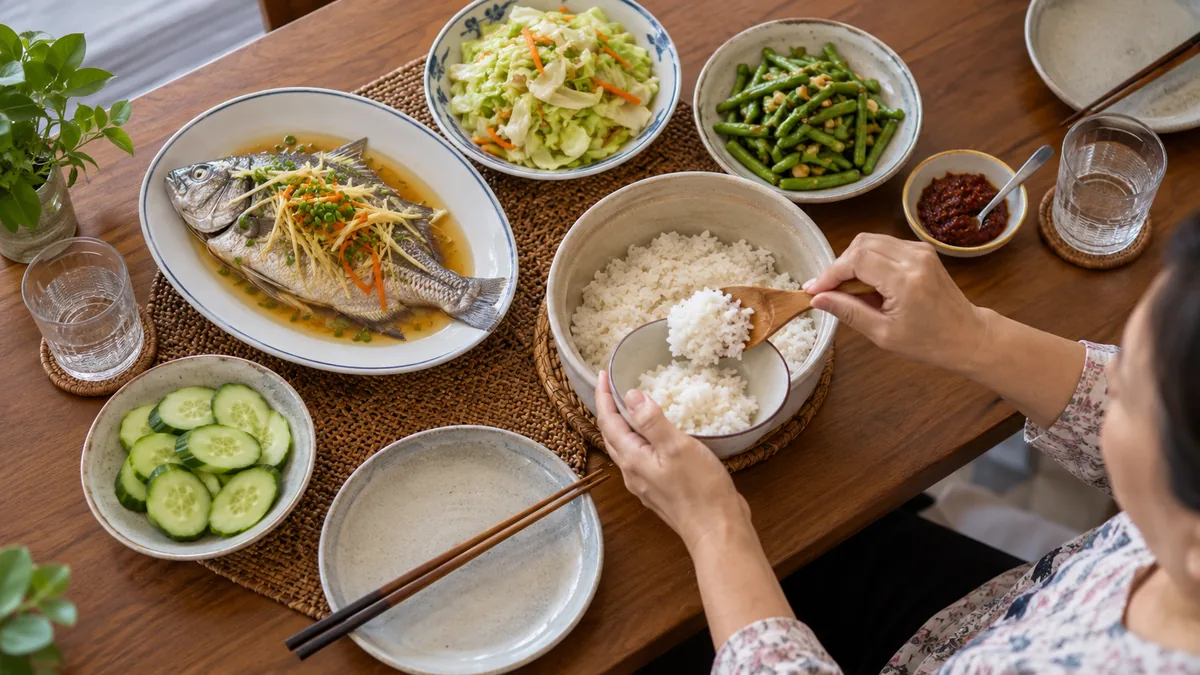
| Nasi campur | Salted fish, soaked-in-gravy dishes | Steamed or grilled fish, plain vegetables, gravy on the side |
| Laksa / soto / bak kut teh | Very salty broth | Eat the noodles and fillings, leave the soup |
| Satay | Peanut sauce is salty and mineral-heavy | Small dip or skip it |
| Teh tarik | Condensed milk adds sugar and phosphate | Kosong or a smaller cup |
Nothing is strictly off-limits. It’s a question of frequency, quantity and what you’re adding.
Potassium: fruit and veges, with a few caveats
“Kidney disease” doesn’t necessarily mean not eating fruit or veges. Potassium only needs to be limited if your blood levels are high, which your doctor will tell you. The following is a general guide, but confirm it with your dietitian.
| Potassium – often higher | Potassium – often lower |
| Banana, durian, orange, coconut water | Apple, pear, pineapple, grapes |
| Tomato, potato, sweet potato | Cabbage, cucumber, cauliflower |
| Large servings of leafy greens | Green beans, capsicum |
Two more warnings: star fruit (belimbing) is widely considered unsafe in kidney disease due to its toxin content, and herbal tonics or noni (mengkudu) can be extremely high in potassium and should be avoided by people with CKD – NKF Malaysia states people suffering from CKD are best off avoiding herbal supplements with high mineral content.
A handy trick is to get rid of some of the potassium via leaching: soaking, boiling vegetables in plenty of water and throwing that water away. A dietitian can advise further on this.
Phosphate and protein: the dynamic duo
Phosphorus comes along with protein, so you need to watch both, but that doesn’t mean you have to give up meat. The sneakiest source of phosphorus is additives – NIDDK warns that excess phosphorus added to processed foods can raise blood phosphate levels more than naturally-occurring ones. This means fish balls, sausages, nuggets, luncheon meat and processed cheese. Watch for ingredients with phos in their name.
For protein, KDIGO recommends approximately 0.8 grams per 1 kg of bodyweight a day for many adults with CKD not on dialysis. However, this is a guideline and you should speak to your dietitian if you are losing weight, or if you have diabetes or are older and frail. A restricted protein diet can rob you of muscle, so please don’t change it without speaking to someone.
Simple suggestions for a phosphate/protein-friendly meal:
- Keep meat, fish and egg portions to about the size of your palm
- Have protein distributed evenly throughout the day
- Use some processed meats in place of fresh chicken, fish or egg
- Use less ikan bilis and cheese
Fluids and supplements
Fluids are not necessarily restricted unless you are swelling, which many people aren’t at this stage, so ask before you make any changes. Similarly, supplements should only be taken on a doctor’s advice, as they can contain harmful minerals for people with kidney failure. The NIDDK recommends only taking vitamins and minerals that have been recommended by your provider.
Diet is a part, but not the whole, of managing kidney disease. Controlling blood pressure and blood sugar, and medication regimes are equally important, as discussed in dealing with kidney disease without dialysis.
Getting your own plan
- Ask for a referral to a renal dietitian experienced with Malaysian food
- Bring your latest potassium and phosphate blood tests (the tests that determine if kidney disease is worsening explain what those mean)
- Keep a three-day food diary including snacks and drinks
- Take photographs of labels on packaged foods that you eat regularly
Stage 4 Kidney Disease Dietary Guidelines for Malaysia
Nutrition plays a decisive role in slowing kidney disease progression and managing metabolic complications during Stage 4 CKD. Adapting international nephrology dietary guidelines to the Malaysian context is essential, as local culinary traditions often feature high-sodium seasoning, rich coconut-based gravies, and hidden phosphorus additives that can accelerate renal burden.
Localized Renal Dietary Principles for Stage 4 Patients
- Controlled Protein Intake: Moderating protein intake (0.6 to 0.8g per kg body weight) reduces uremic toxins while preventing protein-energy wasting, prioritizing high-biological-value sources.
- Strict Sodium Restriction: Avoiding processed seasonings, belacan, kicap, instant noodles, and preserved foods helps maintain blood pressure control and minimizes fluid retention.
- Managing Dietary Potassium Levels: Regulating intake of potassium-rich local fruits (such as bananas, durian, and starfruit) and double-boiling root vegetables prevents dangerous hyperkalemia.
- Limiting Inorganic Phosphorus Additives: Eliminating processed meats, carbonated colas, and packaged foods containing inorganic phosphate preservatives protects vascular elasticity.
- Individualized Dietitian Counseling: Consulting a registered clinical renal dietitian ensures meal plans meet caloric requirements without triggering electrolyte imbalances.
Frequently Asked Questions
Can I still eat nasi lemak?
Often, yes, but in a lighter version with less sambal and no ikan bilis, and avoiding salty extras.
Do I have to stop eating fruit?
Only those high in potassium and only if your blood levels are high.
Is coconut water safe?
High in potassium, so it’s often limited if your levels are high. Speak to your doctor.
Is star fruit poisonous?
Star fruit (belimbing) is generally discouraged in kidney disease because the kidneys cannot break it down, leading to toxicity.
Should I eat less protein?
Many people are on a moderated-protein diet, but only as recommended by a dietitian: too little protein can rob you of muscle.
Are herbal supplements safe?
Check first: some are high in potassium and/or phosphate and may tax the kidneys.
Can diet reverse stage 4 kidney disease?
No. Diet helps to protect remaining function and blood chemistry, in tandem with controlling blood pressure, blood sugar and medication.
Want help planning your next steps?
If you’d like help making sense of your kidney results, gather your recent reports and speak with the 23C Regen team. Your nephrologist and renal dietitian stay in charge of your diet.
This article is general information, not medical advice or a substitute for ordering tests through your own doctor. Consult with our team for proper assessment.