
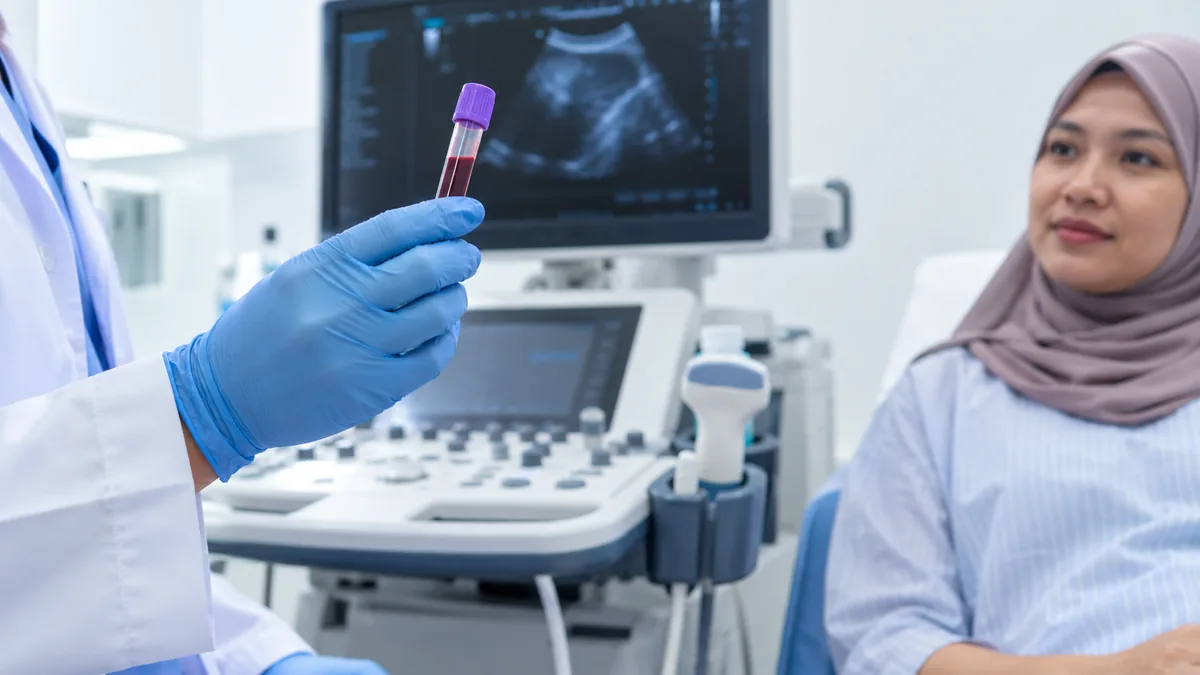
Many people hear about the AFP blood test and assume it is a simple way to check for liver cancer. It is a useful test, but on its own it is not enough, and relying on it alone can lead to both false reassurance and unnecessary worry. This guide explains why.
What Is AFP?
Alpha-fetoprotein (AFP) is a protein made mainly by the fetal liver. In healthy adults, levels are normally low. Some liver tumours produce more AFP, which is why it is used as a tumour marker. The exact reference range differs slightly between laboratories, and a commonly used cut-off is around 20 ng/mL.
Why AFP Alone Is Not Enough
| Limitation | What It Means in Practice |
| Many early tumours do not raise AFP | A normal AFP does not rule out early liver cancer |
| Many other conditions raise AFP | Hepatitis flares, active viral hepatitis, cirrhosis itself and pregnancy can raise it, causing false alarms |
| Sensitivity is limited | AFP misses a significant proportion of small tumours, which are the ones most treatable |
| Results can fluctuate | A single value is less informative than a trend |
Because of this, AFP is generally used to support imaging, not replace it.
The Role of Ultrasound
Liver ultrasound is the main surveillance tool. It can show new lesions in the liver before symptoms appear. It also has limits:
- Small tumours can be missed
- Obesity, a very nodular cirrhotic liver or bowel gas can make views poor
- Results depend on the operator and equipment
Adding AFP to ultrasound can modestly improve detection compared with ultrasound alone in some groups, which is why the two are often combined. If ultrasound views are limited, doctors may use CT or MRI instead.
Surveillance vs Diagnosis
| Surveillance | Diagnosis | |
| Purpose | Look for cancer in people at higher risk who have no symptoms | Confirm or exclude cancer after an abnormal result or symptoms |
| Typical tests | Ultrasound, with or without AFP, about every 6 months | Multiphasic CT or MRI, sometimes biopsy |
| Who it applies to | Defined risk groups | Anyone with a suspicious finding |
| What an abnormal result means | Further testing is needed | A diagnosis can usually be made or excluded |
AFP belongs to surveillance. It is not a diagnostic test for cancer.
What Happens if AFP Is High?
A raised AFP does not mean you have cancer. Your doctor will usually:
- Repeat the test to see whether the value is rising or stable
- Check for other causes such as a hepatitis flare
- Arrange imaging, usually ultrasound plus a multiphasic CT or MRI if concern remains
- Refer to a hepatologist or specialist team if a lesion is found or AFP continues to rise
What Happens if an Ultrasound Shows a Lesion?
In someone with cirrhosis, a multiphasic CT or MRI can often confirm liver cancer based on a typical enhancement pattern, without needing a biopsy. A specialist team then discusses options such as surgery, ablation, other local therapies or transplant, depending on tumour size, liver function and overall health.
Other Uses of AFP
AFP can also be helpful after a cancer diagnosis, for monitoring response to treatment and detecting recurrence. In those settings, it is interpreted alongside imaging and your specialist’s assessment.
Practical Tips
- Do not rely on AFP alone for reassurance
- Keep your ultrasound appointments even if AFP is normal
- Ask whether your surveillance is based on ultrasound plus AFP and when the next one is due
- Tell your doctor about hepatitis flares or pregnancy, since these can affect AFP
- Keep a record of your results, so trends can be followed
For more on who needs surveillance and how often, see liver cancer risk and screening in Malaysia. If you have cirrhosis, our liver cirrhosis page explains standard care, and does cirrhosis always lead to liver cancer? puts the risk in context.
Frequently Asked Questions
If my AFP is normal, can I skip my ultrasound?
No. Many early liver cancers do not raise AFP, so a normal result does not rule cancer out. Ultrasound surveillance should continue as advised.
Does a high AFP mean I have liver cancer?
Not necessarily. Hepatitis flares, cirrhosis and other conditions can raise AFP. Your doctor will repeat the test and arrange imaging before drawing conclusions.
Is ultrasound alone enough?
It is the main surveillance tool, but it can miss small tumours, especially when views are poor. Doctors sometimes add AFP or use CT or MRI.
How often should AFP be checked?
When used in surveillance, it is generally checked with ultrasound about every 6 months. Your hepatologist will confirm the schedule for you.
Can AFP be used to diagnose liver cancer?
No. Diagnosis usually relies on multiphasic CT or MRI, and sometimes biopsy. AFP supports surveillance and monitoring but cannot confirm cancer.
This article is for general education and does not replace medical advice.