

Medically reviewed by Dr Abdul Farid bin Rahmathulla, Medical Doctor, 23C Life Science Centre · Last reviewed 29 September 2026
Liver cancer often grows silently. By the time symptoms such as weight loss, abdominal pain or jaundice appear, treatment options are usually narrower. That is why doctors recommend regular checks for people at higher risk, instead of waiting for symptoms. This guide explains who those people are, what the checks involve, and how to talk to your doctor about them. It does not replace advice from your hepatologist.
Surveillance, Screening and Diagnosis: Three Different Things
| Term | Meaning | Who It Applies To |
| Surveillance | Repeated, scheduled testing in people known to be at higher risk | Defined risk groups, for example cirrhosis |
| Screening | One-off or occasional testing of people without known risk | Generally not recommended for liver cancer in the general population |
| Diagnosis | Testing to confirm or exclude cancer after an abnormal result or symptoms | Anyone with a suspicious finding |
Most liver cancer checks are surveillance. The aim is to find a tumour while it is small enough for treatments such as surgery, ablation or transplant, which are most effective at an early stage.
Who Needs Regular Liver Cancer Checks?
Recommendations vary by cause and by guideline, and your hepatologist decides what applies to you. The table shows how risk groups are commonly handled.
| Risk Group | Why Risk Is Higher | Usual Approach |
| Cirrhosis from any cause | Scarred liver tissue is the strongest single risk factor | Surveillance, generally every 6 months |
| Chronic hepatitis B without cirrhosis | The virus itself can drive cancer; see hepatitis B and liver cancer without cirrhosis | Surveillance for higher-risk patients, often by age, family history or risk score |
| Chronic hepatitis C with advanced fibrosis or cirrhosis | Risk persists even after the virus is cured | Surveillance usually continues after cure |
| Fatty liver (MASLD) with advanced fibrosis | Scarring raises risk; see fatty liver and liver cancer without cirrhosis | Surveillance when advanced fibrosis or cirrhosis is confirmed |
| Fatty liver without advanced fibrosis | Absolute risk is low | Routine surveillance is generally not advised; risk assessment instead |
| Family history of liver cancer | Shared genetic and environmental factors | Doctor may start surveillance earlier |
What Surveillance Involves
A standard programme combines:
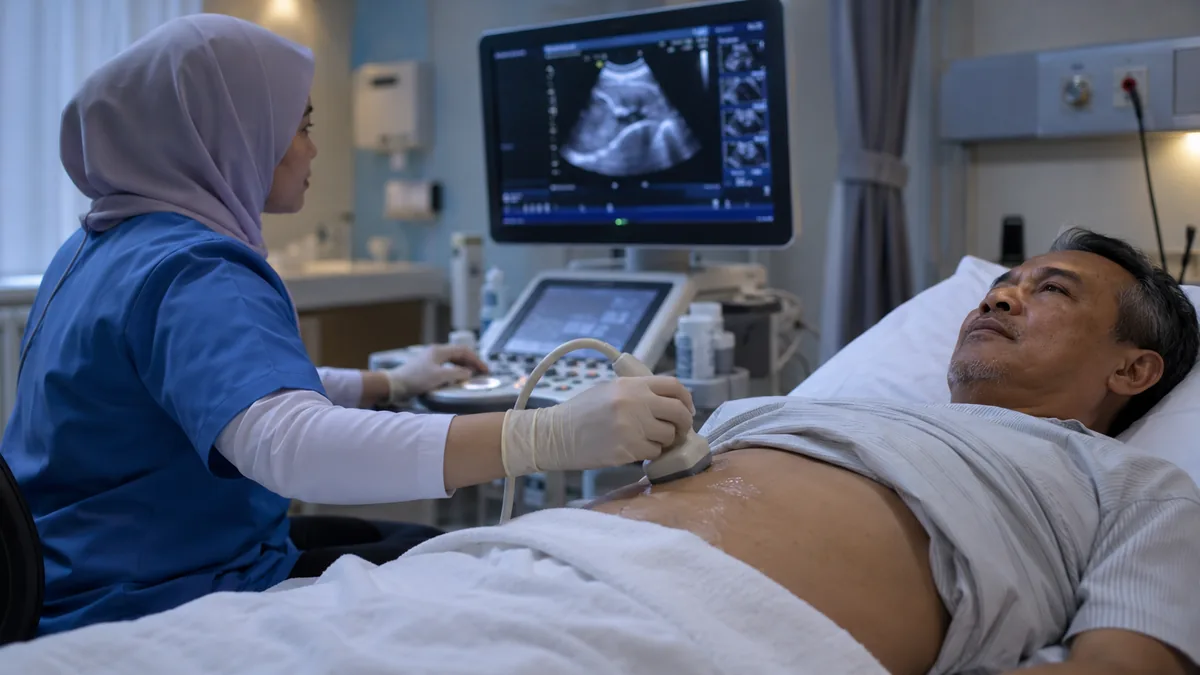
- Liver ultrasound, usually every 6 months, to look for new lesions
- AFP blood test, sometimes added, which can support ultrasound but is not reliable on its own (see Is an AFP blood test enough?)
- CT or MRI, used when ultrasound views are limited, for example in people with obesity or a very nodular liver, or when something abnormal is seen
If a lesion is found, a multiphasic CT or MRI usually confirms whether it is cancer, and the case is typically reviewed by a specialist team.
The Malaysian Context
Several factors make this topic relevant here:
- Hepatitis B remains a significant cause of chronic liver disease, particularly in adults born before national infant vaccination began in the late 1980s
- Hepatitis C is less common but still important, and effective cure is now widely available
- Fatty liver disease is rising alongside obesity and type 2 diabetes
- Many people discover liver disease only through a routine blood test or scan
Malaysian clinical guidance is updated from time to time, so ask your hepatologist which criteria apply to you now.
What Lowers Your Risk
- Treat the cause: antiviral treatment for hepatitis B or C, alcohol cessation, and metabolic management for fatty liver
- Get vaccinated against hepatitis B if you are not immune
- Limit alcohol, especially if you already have liver disease
- Manage weight, blood sugar and cholesterol
- Avoid smoking
- Store food properly to limit aflatoxin exposure from mouldy grains and nuts
Our Guide on liver cancer risk reduction and monitoring in Malaysia covers these steps in more detail.
Where Stem Cell Research Fits
There is no evidence that stem cell therapy prevents liver cancer, and it should never replace or delay surveillance. Research into cell-based approaches for liver disease is still early; see stem cells and liver disease evidence for what has and has not been studied.
Liver Cancer Risk & Surveillance Screening in Malaysia
Hepatocellular carcinoma (HCC) is one of the most significant oncological challenges across Malaysia, largely attributable to endemic chronic Hepatitis B infections, emerging Hepatitis C, and a rising surge in metabolic dysfunction-associated steatotic liver disease (MASLD). Because early hepatic malignancy is almost entirely asymptomatic, structured surveillance screening provides the best clinical opportunity for early intervention and curative therapeutic outcomes.
Clinical Screening Standards & Surveillance Protocols
- Biannual Ultrasound Surveillance: High-resolution abdominal ultrasonography conducted every six months represents the clinical cornerstone for detecting suspicious focal liver lesions in high-risk cohorts.
- Alpha-Fetoprotein (AFP) Biomarker Testing: Serum AFP is utilized alongside ultrasonography as a complementary serological marker to monitor cellular dynamics and hepatic regenerative activity.
- High-Risk Identification in Malaysia: Chronic Hepatitis B carriers, individuals with established cirrhosis of any etiology, and patients with advanced steatohepatitis with bridging fibrosis require compulsory surveillance.
- Advanced Triphasic CT & MRI Diagnostic Workups: Any indeterminate nodule identified during standard screening warrants multi-phase contrast CT or liver-specific contrast MRI across specialized Malaysian hepatology centers.
- Strict Adherence to Ethical Guidance: In compliance with Malaysian healthcare law, medical screening explicitly provides diagnostic accuracy without sensationalized curative claims.
Frequently Asked Questions
Should everyone in Malaysia get screened for liver cancer?
No. Routine screening is not recommended for the general population. Surveillance is advised for defined higher-risk groups, such as people with cirrhosis or certain chronic hepatitis B patients.
How often should surveillance be done?
For people in a surveillance programme, ultrasound with or without AFP is generally done about every 6 months. Your hepatologist will set the interval that fits you.
If my hepatitis C is cured, can I stop the checks?
Not always. Risk falls after cure but does not disappear, especially if you had advanced fibrosis or cirrhosis. Your doctor decides whether surveillance should continue.
Can liver cancer be found without symptoms?
Yes, and this is the main purpose of surveillance. Early liver cancer often causes no symptoms, so tests in high-risk people are what detect it.
Who should I ask about my own risk?
Your hepatologist or doctor is managing your liver condition. Bring your latest blood tests, imaging reports and any hepatitis results so your risk can be assessed properly.
This article is for general education and does not replace medical advice. Consult our medical team for your proper checkup and assessment.