
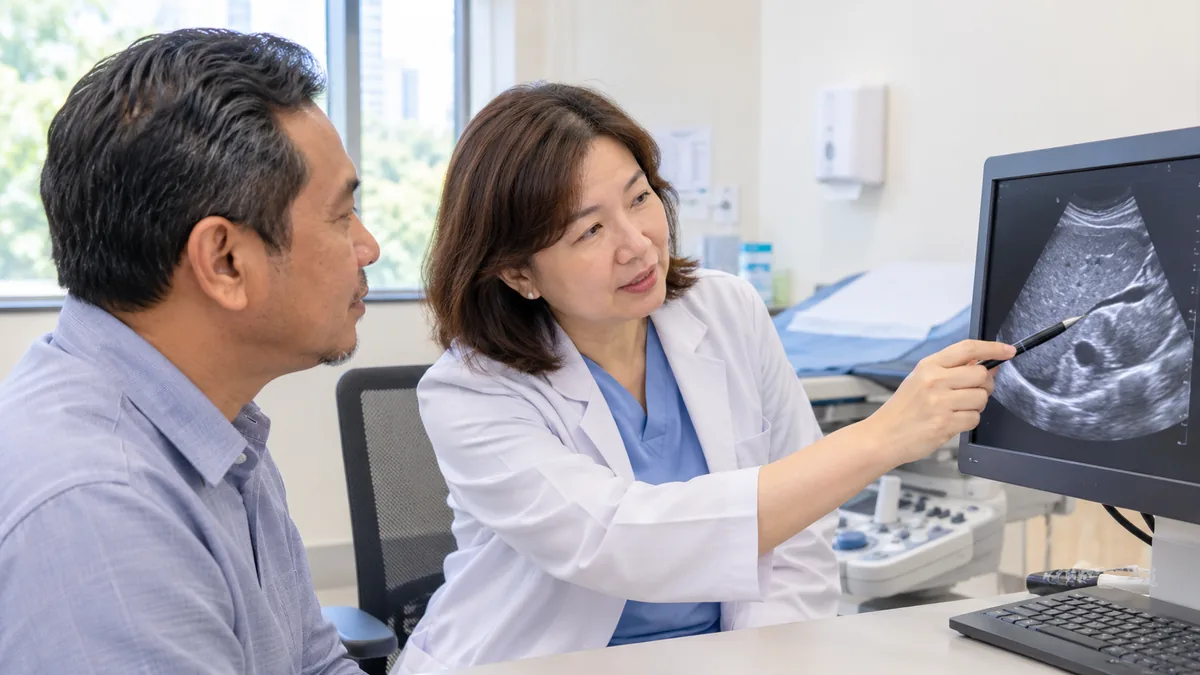
Liver cancer rarely turns up out of nowhere. In Malaysia it usually grows in a liver that has been damaged for years, most often by long-term hepatitis B, fatty liver or cirrhosis, and it stays quiet until it’s fairly far along. So the more useful question isn’t “will I get it?” but “does my liver put me in a group that should be checked every six months?”
Why Liver Cancer Is Usually Found Late in Malaysia
Liver cancer is the eighth most common cancer in Malaysia, and in the 2017 to 2021 national cancer registry report it ranks fourth among men.
The timing is the harder part. Hospital studies in Malaysia keep finding that most patients arrive at an intermediate or advanced stage, when treatment options are narrower. The liver has very few pain nerves, so a growing tumour can sit there without a single symptom. Plenty of people only learn they have chronic liver disease when a routine blood test, or a scan for something unrelated, picks it up.
There’s a hopeful side to this too. Most liver cancers follow a long and fairly recognisable run of liver damage. That gives people and their doctors a real window to act early, or to catch a small tumour while more treatment options are still open.
What Raises the Risk of Liver Cancer
Most cases of hepatocellular carcinoma, the common type of liver cancer, develop in a liver that is already scarred. One review puts 80 to 90 per cent of new cases in people with cirrhosis. A handful of causes sit behind most of it.
Hepatitis B and hepatitis C
Malaysia began vaccinating all newborns against hepatitis B in 1989, and it has protected younger adults well. Anyone born before that missed the programme, which is why chronic hepatitis B is still seen mostly in older adults.
Hepatitis B is the unusual one, because liver cancer can appear in hepatitis B carriers before any cirrhosis. Doctors therefore weigh age, family history and how active the virus is, instead of waiting for scarring to show up.
Hepatitis C is less common here, and it can now be cured. Risk doesn’t vanish after cure, though, especially if the liver was already badly scarred at the time.
Fatty liver
Fatty liver, now often called MASLD, is rising alongside obesity and type 2 diabetes. A Malaysian review linked the upward trend in liver cancer deaths between 1990 and 2010 to the growth of diabetes and obesity, so this isn’t a small group.
Most people with fatty liver never develop liver cancer. The risk is concentrated in those whose liver has moved along the path described in fatty liver stages from fibrosis to cirrhosis. In a smaller number, fatty liver can cause liver cancer even without cirrhosis, usually alongside diabetes or advanced fibrosis.
Guidelines don’t fully agree on this group. The American guidance advises against routine surveillance for fatty liver with advanced fibrosis but no cirrhosis, while other societies are willing to extend surveillance to some high-risk patients without cirrhosis. So your own hepatologist draws the line for you.
Cirrhosis
Scarring from any cause is the strongest single risk factor. It’s also worth knowing that cirrhosis does not always lead to liver cancer. The risk is simply high enough that regular checks are recommended for everyone with liver cirrhosis.
Other things that add to it
- Heavy, long-term alcohol use
- Aflatoxin from mouldy grains and nuts that were stored badly
- Smoking
- Long-standing diabetes and obesity
- A close relative who has had liver cancer
Warning Signs and Early Clues
Early liver cancer usually causes nothing you’d notice. Later signs can include unexplained weight loss, a poor appetite, a dull ache or fullness under the right ribs, a swollen belly, yellow skin or eyes, and tiredness that doesn’t lift.
None of these points only to cancer, and plenty of other conditions cause them. Knowing liver cancer symptoms and when to get checked helps, but waiting for symptoms is the wrong plan.
Blood tests are often the first clue. A high ALT and AST result can point to inflammation or fat in the liver, though normal enzymes don’t rule out scarring that has already built up.
Liver Cancer Screening and Surveillance in Malaysia
Doctors separate two ideas that people often mix up. Surveillance means repeated, scheduled checks in people already known to be at higher risk. Screening the whole population isn’t generally recommended for liver cancer. The aim is to find a tumour while it is small enough for surgery, ablation or transplant.
The standard approach, backed by the American, European and Asia-Pacific liver societies, is an ultrasound about every six months, with or without a blood test called AFP. Six months follows how quickly liver tumours tend to grow.
| Check | What it does | Where it falls short |
| Liver ultrasound | Looks for new lesions, usually every 6 months | Harder to read in people with obesity or fatty liver, and depends on the operator |
| AFP blood test | A tumour marker added to ultrasound | Can be normal with a tumour, or raised for other reasons, so it is never used alone |
| FibroScan | Measures liver stiffness and fat | Doesn’t find tumours, but shows how scarred the liver is, which helps decide who needs surveillance |
| CT or MRI | Confirms whether a suspicious lesion is cancer | Used after an abnormal result, not as a routine first check |
How the AFP blood test fits into liver cancer screening depends on your risk group. FibroScan fatty liver testing in Malaysia is quick and painless. Prices vary between hospitals, so ask for a written quote before you book.
For the full detail on who qualifies and how the process runs, liver cancer risk and screening options in Malaysia breaks each group down.
Who Should Be Checked, and How Often
Your hepatologist decides what applies to you. As a general picture:
- Cirrhosis from any cause: surveillance, generally every 6 months
- Chronic hepatitis B: surveillance for higher-risk carriers, often based on age, family history and viral activity
- Hepatitis C with advanced fibrosis or cirrhosis: surveillance usually continues even after the virus is cured
- Fatty liver with advanced fibrosis: surveillance is a doctor’s call, since guidelines differ
- Fatty liver without advanced fibrosis: routine surveillance is generally not advised, but a risk assessment is
- Family history of liver cancer: your doctor may start checks earlier
Ways to Lower Your Risk
You can’t change your age or your family history. A lot of the rest is within reach.
- Treat the cause. Antiviral treatment for hepatitis B or C, stopping alcohol, and managing weight, blood sugar and cholesterol all matter.
- Get vaccinated against hepatitis B if you aren’t immune. Adults born before 1989 weren’t covered by the national programme.
- Cut back on alcohol, especially if your liver is already affected.
- Store grains and nuts properly to avoid mould and aflatoxin.
- Stop smoking.
- Keep your check-ups. Turning up for the six-monthly ultrasound is one of the few things that clearly helps.
Day-to-day habits are covered in how to lower your liver cancer risk in Malaysia. What you eat matters more than most people expect, and a fatty liver diet built around Malaysian food is easier to stick to than a generic one. Weight loss and better eating are the main tools doctors use for early fatty liver, and whether fatty liver is reversible depends mostly on how much scarring is already there.
When to See a Hepatologist or an Oncologist
A hepatologist is the right starting point if you have hepatitis B or C, fatty liver with abnormal tests, cirrhosis, or a worrying result on a blood test or scan. They run your surveillance and decide how often you need it.
If a scan finds a suspicious lesion, you’ll usually be seen by a team. That can include a hepatologist, a liver surgeon, an interventional radiologist and an oncologist. Don’t wait for the next scheduled scan if you notice new symptoms. Yellow eyes, a swelling belly, unexplained weight loss or persistent pain under the right ribs deserve a prompt visit. Vomiting blood or passing black stools needs emergency care right away.
Where Regenerative Care Fits, and Where It Doesn’t
Let’s be plain about this. Stem cell therapy is not a treatment for liver cancer. There’s no evidence that it prevents liver cancer either, and it should never replace or delay surveillance, scans or specialist care.
What this site does cover is liver health more broadly. Research into cell-based approaches for chronic liver disease is still early, and the current picture of stem cell therapy for liver disease in Malaysia is mostly about what has and hasn’t been studied. Anyone with fatty liver disease or cirrhosis who wants to explore stem cell therapy as one option should do it alongside their hepatologist, not instead of them. It’s also fair to ask honestly whether liver cirrhosis can be reversed, because the answer shapes how you plan your care.
Any assessment starts with a medical doctor reviewing your reports and history.
Liver Topics People Ask About Most
If you’re working out your risk
- Many people first hear about trouble through high ALT and AST results on a routine blood test.
- Fatty liver stages from fibrosis to cirrhosis explains why scarring is the turning point.
- Hepatitis B and liver cancer risk isn’t limited to people with cirrhosis.
- Whether fatty liver can lead to cancer without cirrhosis is a common worry for people with diabetes.
- People with scarring often ask whether cirrhosis always leads to liver cancer.
If you’re thinking about checks
- Liver cancer risk and screening options in Malaysia set out which groups need regular surveillance.
- The AFP blood test helps, but it can’t be relied on alone.
- A FibroScan for fatty liver shows how stiff and fatty the liver is.
- Knowing liver cancer symptoms and when to get checked helps you act sooner.
If you want to protect your liver
- Practical habits are laid out in how to lower your liver cancer risk.
- A fatty liver diet using Malaysian food makes the changes realistic.
- People often ask whether fatty liver is reversible before they change anything.
- Many families also wonder whether liver cirrhosis can be reversed.
- The research on stem cell therapy for liver disease is early, and it isn’t a liver cancer treatment.
Frequently Asked Questions
Who is most at risk of liver cancer in Malaysia?
People with cirrhosis from any cause carry the highest risk. Chronic hepatitis B carriers come next, especially older adults, followed by those with hepatitis C or advanced scarring from fatty liver. Heavy alcohol use, long-standing diabetes and a family history add to it. Your hepatologist can place you properly.
How often should I get checked for liver cancer?
People in a surveillance programme usually have an ultrasound about every six months, often with an AFP blood test. The interval follows how fast liver tumours tend to grow. Your hepatologist may adjust it based on your cause of liver disease and your results.
Can fatty liver cause liver cancer?
It can, but most people with fatty liver never develop it. The risk rises once the liver is scarred, and in a smaller number it appears earlier. If you have diabetes or advanced fibrosis, fatty liver and liver cancer without cirrhosis is worth raising with your doctor.
Is a FibroScan a liver cancer test?
No. FibroScan measures liver stiffness and fat, so it can’t find a tumour. It does show how scarred the liver is, which helps decide whether you need regular ultrasounds. FibroScan fatty liver testing in Malaysia is usually quick and painless.
Does stem cell therapy treat or prevent liver cancer?
No. Stem cell therapy is not a liver cancer treatment, and there’s no evidence it prevents liver cancer. Research on cell-based approaches in chronic liver disease is still early, and it should never replace or delay surveillance. The evidence on stem cell therapy for liver disease in Malaysia is limited so far.
Can I lower my risk if I already have hepatitis B or fatty liver?
Yes, though it isn’t a guarantee. Treating the cause helps most, along with limiting alcohol, managing weight and blood sugar, and keeping your scheduled checks. How to lower your liver cancer risk in Malaysia lists the steps that matter most.
What should I do if I have symptoms now?
Book a doctor’s visit soon instead of waiting for your next scheduled check. Unexplained weight loss, pain under the right ribs, a swollen belly or yellow eyes all need attention, and none of them point only to cancer. Liver cancer symptoms and when to get checked explains what each can mean.
Talk to a Doctor About Your Liver
If you have hepatitis B, fatty liver, cirrhosis or a family history of liver cancer, a proper assessment is the sensible next step. Bring your recent blood tests, scan reports and any hepatitis results, and the team will arrange a liver health assessment with a doctor.
WhatsApp us to book a liver health assessment, call +60 12-242 1523, or book an appointment.
This page is for general education and does not replace advice from your own doctor. Talk to your doctor about your own situation. It does not describe any stem cell, NK cell or secretome therapy as a treatment for liver cancer.
References
- Singal AG et al. AASLD Practice Guidance on prevention, diagnosis, and treatment of hepatocellular carcinoma. Hepatology 2023;78:1922-1965.
- Ministry of Health Malaysia, Institut Kanser Negara. Summary of Malaysia National Cancer Registry Report 2017-2021.
- Raihan R et al. Hepatocellular Carcinoma in Malaysia and Its Changing Trend. Euroasian J Hepato-Gastroenterol 2018;8(1):54-56.
- Hepatocellular carcinoma: a local registry on risk factors, imaging patterns, treatment strategies and overall survival. Med J Malaysia 2021;76(2):151-156.
- Hepatocellular carcinoma surveillance: an evidence-based approach. World J Gastroenterol 2019;25(13):1550-1559.
- Hepatitis B seroprevalence among University of Malaya students in the post-universal infant vaccination era. Med J Malaysia 2013;68(2):144-148.