
Medically reviewed by Dr Abdul Farid bin Rahmathulla, Medical Doctor, 23C Life Science Centre · Last reviewed 3 November 2026
Can you lower your risk of liver cancer? Yes, but not to zero, and anyone who says otherwise is selling something. Most of it comes down to a few things you probably already know about: hepatitis B or C, fatty liver, drinking too much, and a scarred liver (cirrhosis). Catch those early, keep them under control, and your odds improve. Here’s how it works in practice, and who actually needs screening.
What Raises Your Liver Cancer Risk in Malaysia
Liver cancer is the eighth most common cancer in Malaysia, and the 2017 to 2021 national cancer registry report ranks it fourth among men. Global Cancer Observatory data, quoted by CodeBlue, counted 2,149 new cases in 2020.[1][2] The causes are changing, though. Newborns have been vaccinated against hepatitis B since 1989, so younger people are well covered. Fatty liver has stepped into the gap. Universiti Malaya Medical Centre figures, reported by CodeBlue in 2021, tied hepatitis B to 44% of new cases and fatty liver to 42%.[2]
Risks also pile up on each other. Hepatitis B plus heavy drinking is worse than either one alone. Same with diabetes and a fatty liver. These combinations explain why the main liver cancer risk factors in Malaysia matter differently for a hepatitis B carrier, a person with diabetes and someone with cirrhosis. Here’s how the main ones look side by side:
| Risk factor | What it does | What you can do |
| Hepatitis B | Inflames and scars the liver over years, and can lead to cancer even without cirrhosis | Get tested, get vaccinated if you’re negative, keep up regular checks if you’re positive |
| Hepatitis C | Quietly damages the liver; no vaccine exists | Get tested, and ask about antiviral medicine |
| Fatty liver | Very common with obesity and diabetes, and can lead to scarring | Weight, food, exercise and a scarring check |
| Heavy drinking | A major cause of cirrhosis, and it makes hepatitis worse | Cut back or stop |
| Cirrhosis | A scarred liver carries the highest risk of all | Six-monthly surveillance |
| Smoking, aflatoxin, family history | Each adds a bit more | Quit smoking, store nuts and grains dry, tell your doctor |
How to Lower Your Liver Cancer Risk: Start With Hepatitis B and C
If you do one thing from this article, get your hepatitis B status checked. Plenty of adults born before 1989 never got the newborn vaccine. A Malaysian study from 2013 put carrier rates at 5 to 7 percent before the programme began, and that’s why doctors suggest a one-off test for anyone in that age group.
Your result sends you down one of three roads:
- Negative, no immunity: get vaccinated. In healthy people the full course protects more than 95 percent.
- Positive: don’t panic, because this isn’t a cancer diagnosis. You’ll need regular monitoring, usually a liver blood test and an ultrasound about every six months, plus antiviral medicine if your doctor sees the virus is active. The follow-up is there because hepatitis B can lead to liver cancer even without cirrhosis.
- Hepatitis C: no vaccine, but antiviral medicine clears the virus in most people, and that lowers the long-term risk. Get tested if you had a blood transfusion before routine screening started, or ever shared needles.
Keep Fatty Liver From Progressing
Fatty liver is now the most common liver problem in Malaysia, mostly because of obesity and diabetes. Most people who have it never get cancer. The ones to watch are those whose livers are starting to scar, and an ordinary ultrasound that says “fatty liver” can’t tell you that. A FibroScan measures how stiff the liver is, which shows how much scarring there is. Doctors do see fatty liver turning into cancer before cirrhosis has even developed, so don’t skip that check.
If you’ve been told you have fatty liver disease, the daily stuff matters most:
- Lose weight slowly. Even a small drop can shrink liver fat.
- Start with the drinks. Teh tarik, sirap, bubble tea and canned drinks are the easiest things to cut.
- Ease off the fried and processed food. Grilled, steamed and veg-heavy meals help, and smaller portions of rich dishes do too.
- Move. About 150 minutes of brisk walking a week is a solid target.
- Keep blood sugar, blood pressure and cholesterol in check. They usually come as a package with fatty liver.
Alcohol, Smoking and Everyday Habits
The World Health Organization lists alcohol as a cause of liver cancer [3], and a World Cancer Research Fund review puts the point where the risk clearly rises at around three or more drinks a day [4]. Heavy drinking is also a well-worn road to cirrhosis. With hepatitis B or C on top, the risk goes up further, so cutting right back or stopping is the safer move. Smoking adds to it as well. People who quit do better than those who keep going. The same review links excess body fat to a higher risk too [4].
One more that people forget: aflatoxin, a toxin from mould that grows on badly stored peanuts and grains. Buy from sellers you trust, keep things dry, and chuck anything that smells musty. And if you already have liver disease, ask your doctor before you start any herbal product or supplement.
Who Needs Liver Cancer Screening, and How Often
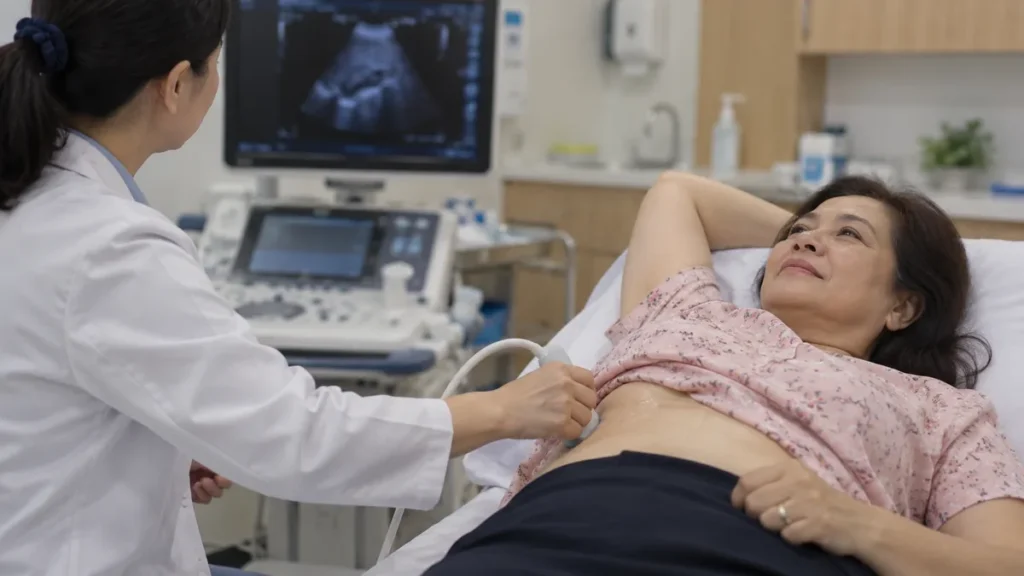
Screening isn’t for everyone. It’s for people whose risk is high enough to make regular checks worthwhile. The usual set-up is an ultrasound, with or without an AFP blood test, every six months. A 2026 practice update from the American Gastroenterological Association[5] still calls that the standard for people with cirrhosis and some people with chronic hepatitis B.
| Who | What’s usually done |
| Cirrhosis, any cause | Ultrasound with or without AFP every 6 months |
| Chronic hepatitis B | Regular monitoring, with six-monthly ultrasound for higher-risk people, as your doctor advises |
| Fatty liver, no advanced scarring | Usually no cancer screening; a FibroScan to check scarring and deal with the cause |
| Family history of liver cancer | Ask your doctor about starting earlier or checking more often |
No test is perfect. The AFP blood test can miss early tumours by itself, so doctors pair it with imaging. And cirrhosis doesn’t always lead to liver cancer. Screening is there to catch trouble early, not because the worst is expected.
Cost-wise, a 2012 Ministry of Health assessment put an AFP test at around RM35 and an ultrasound at RM17 to RM100 in government hospitals. That’s old, and private prices are higher, so get a current quote. Not sure where to start? A GP can refer you, and knowing how liver cancer screening in Malaysia usually works makes the first appointment easier.
Warning Signs Worth Acting On
Early liver cancer often feels like nothing, and that’s the whole reason screening exists. Get checked if you notice pain in the upper right of your belly that won’t go away, weight loss you can’t explain, a swollen belly, yellow skin or eyes, or feeling full after tiny meals. Lots of things cause these, and most aren’t cancer. They still need a doctor.
A Quick Action List
- Find out your hepatitis B status, especially if you were born before 1989.
- Get the vaccine if you aren’t immune.
- Ask for a FibroScan if you have fatty liver, diabetes or obesity.
- Cut down on alcohol and stop smoking.
- Keep up six-monthly checks if you have cirrhosis or chronic hepatitis B.
- Tell your doctor if liver cancer runs in your family.
Where 23C Regen Fits In
Let’s be straight about this: stem cells and 23C treatments don’t prevent or treat liver cancer, and screening belongs with your GP, hepatologist or hospital. What 23C can do is help people already living with liver cirrhosis or fatty liver find out whether regenerative options are worth discussing alongside their normal care. The evidence is early and results vary from person to person. The assessment process begins with a review of your diagnosis and history, and agreeing to it doesn’t lock you into treatment.
Frequently Asked Questions
Can I lower my liver cancer risk to zero?
No, but you can lower the risk a lot. Hepatitis B vaccination, treating hepatitis B or C, drinking less, managing weight and diabetes, and regular checks if you have cirrhosis all help. Some people with risk factors never get it, and some with none do.
Who should get a hepatitis B test in Malaysia?
Every adult should be tested at least once, especially if you were born before 1989, when the newborn vaccine began. A GP can order the blood test. It tells you whether you’re infected, immune, or unprotected and need the vaccine.
Does fatty liver mean I will get liver cancer?
No. Most people with fatty liver never do. The risk climbs when scarring builds up, which is why a FibroScan is useful. If you’re curious, here’s how fatty liver moves on to fibrosis and cirrhosis over time.
How often should I get screened for liver cancer?
With cirrhosis, doctors usually advise an ultrasound, with or without an AFP test, every six months. With chronic hepatitis B, your doctor decides based on your age, family history and liver health. If you have neither, routine screening usually isn’t recommended.
How much does liver cancer screening cost in Malaysia?
A 2012 Ministry of Health assessment listed AFP at about RM35 and ultrasound at RM17 to RM100 in government hospitals. Private prices are higher now, so ask the clinic for a current quote and check what a health package actually includes.
Does occasional drinking raise liver cancer risk?
Heavy, regular drinking is the real worry, and research reviewed by the World Cancer Research Fund points to around three or more drinks a day. But if you have hepatitis, fatty liver or cirrhosis, even moderate drinking can add to the damage. Ask your doctor what’s safe for you.
Can stem cell therapy lower my liver cancer risk?
No. There’s no evidence that stem cells prevent or treat liver cancer, and no 23C treatment is offered for that. For people with liver cirrhosis, regenerative options are assessed one case at a time alongside standard care. You can read about how stem cells are being studied in liver disease, but speak to your hepatologist first.
Talk to the 23C Team
Already living with fatty liver or cirrhosis and not sure what to do next? Book an assessment through WhatsApp or the contact form. Bring your latest blood tests, scan or FibroScan report if you have them. And talk to your own doctor before you change any treatment or medication.
This article is for general education and isn’t medical advice. Please talk to your doctor about your own liver health, screening and treatment. Regenerative medicine involves emerging therapies, and individual outcomes can’t be predicted or guaranteed.
References
- International Agency for Research on Cancer. Global Cancer Observatory: Cancer Today (GLOBOCAN). https://gco.iarc.who.int/today
- CodeBlue (Galen Centre). Health Experts Seek To Build Malaysia Liver Disease Coalition. 7 July 2021. https://codeblue.galencentre.org/2021/07/07/health-experts-seek-to-build-malaysia-liver-disease-coalition/
- World Health Organization. Alcohol (fact sheet). https://www.who.int/news-room/fact-sheets/detail/alcohol
- World Cancer Research Fund / American Institute for Cancer Research. Diet, nutrition, physical activity and liver cancer (Continuous Update Project Expert Report 2018). https://www.wcrf.org/resources/liver-cancer-report
- Rich NE, Villanueva A, Marrero JA, Kanwal F. AGA Clinical Practice Update on Risk Stratification and Emerging Surveillance Strategies for Hepatocellular Carcinoma: Expert Review. Gastroenterology. 2026;170(7):1606. doi:10.1053/j.gastro.2026.03.006. https://www.gastrojournal.org/article/S0016-5085(26)00243-X/fulltext